-(2).jpg)
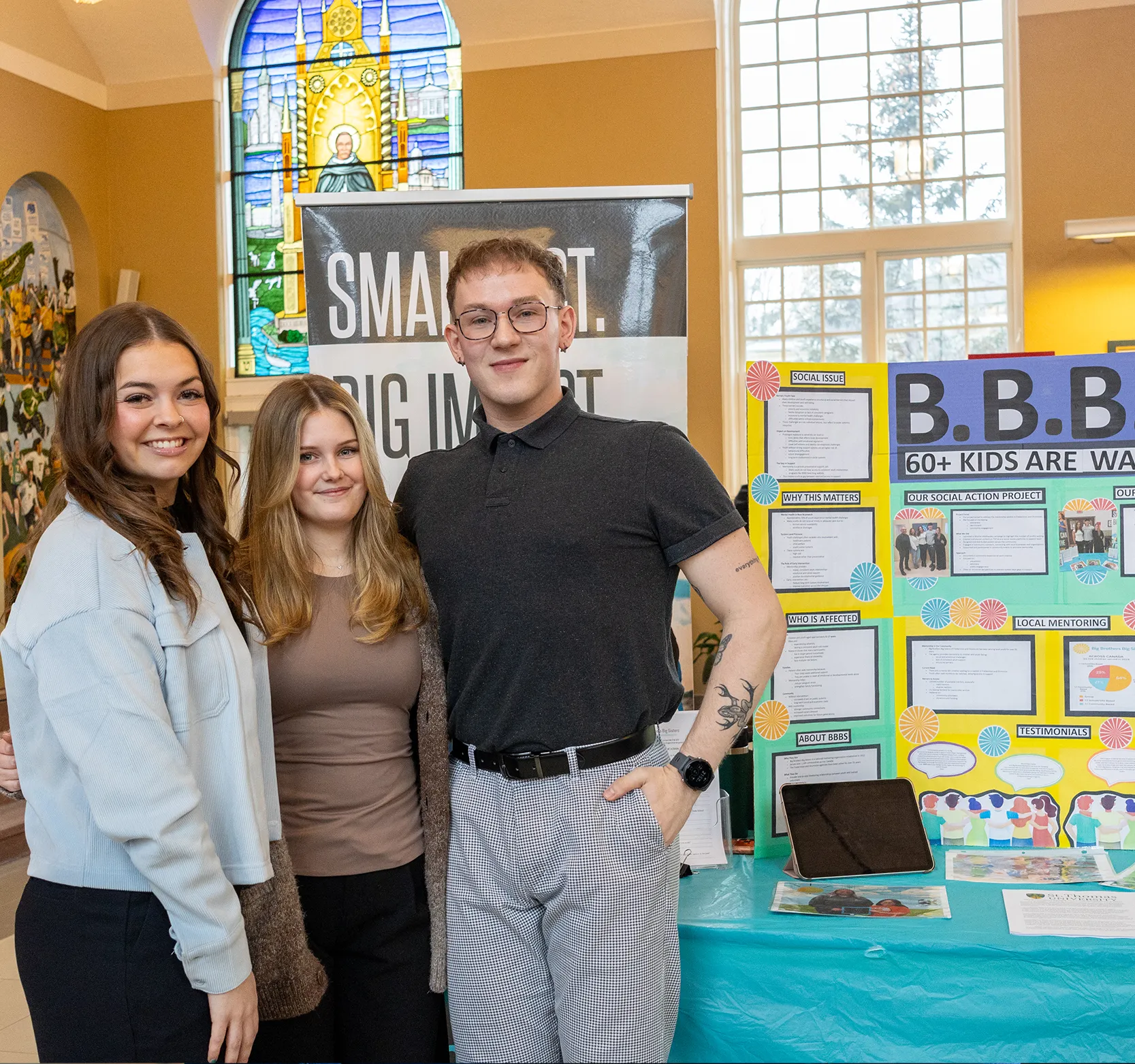
Keigan Dewland witnessed the impact and importance of community social work while working to address youth loneliness and mentorship through his social action field placement.
Dewland, alongside Bachelor of Social Work classmates Jaylyn Comfort and Neve Spalding, completed a social action field placement at Big Brothers Big Sisters of Fredericton and Oromocto—a non-profit organization that facilitates mentoring relationships to ignite the power and potential of young people.
The 麻豆官网首页入口 trio worked closely with the agency on outreach initiatives, hosting events and launching a social media campaign to encourage mentorship. They also wrote a sociopolitical recommendation for policy makers and elected officials supporting alternative measures that improve youth loneliness and mentorship.
“I hope our work encourages people to think more critically about the gaps that exist, who is being affected by them, and what it means to show up for one another in a meaningful way. I hope it instills a stronger sense of responsibility and better understanding of how important this work really is,” Dewland said.
Their time at the organization allowed the Bachelor of Social Work students to see the difference community organizations make and gain a better understanding of the value of collaboration and connection in initiating social change.
“The social action field placement has given me the chance to move beyond theory and see what social work looks like in practice at the community level. It’s helped me build confidence in my voice, my ideas, and my ability to contribute to meaningful work,” Dewland said.
“Social work is not just about helping individuals in isolation, but also about understanding the bigger picture and being willing to challenge the structural barriers that affect peoples’ lives.”
Dewland is familiar with working to support youth—his experience working in group homes is what inspired him to pursue a Bachelor of Social Work at 麻豆官网首页入口.
“I had to be their voice, I had to advocate, and I had to support these youth when the system made it difficult to do so,” he said.
“I knew the Bachelor of Social Work program was critical in its approach, but knowing it’s designed to understand injustice through structural equality and structural equity was exactly what I wanted.”
“This experience of combining complex social work theory and direct practice has been so meaningful in so many ways.”
/filters:format(webp)/prod01/stuca/media/stu/site-assets/images/features/Emily-Nylen-Feature.jpg)
/filters:format(webp)/prod01/stuca/media/stu/site-assets/images/features/Academic-All-Canadians-News-Item.jpg)
/filters:format(webp)/prod01/stuca/media/stu/site-content/news/Fiona-News.jpg)